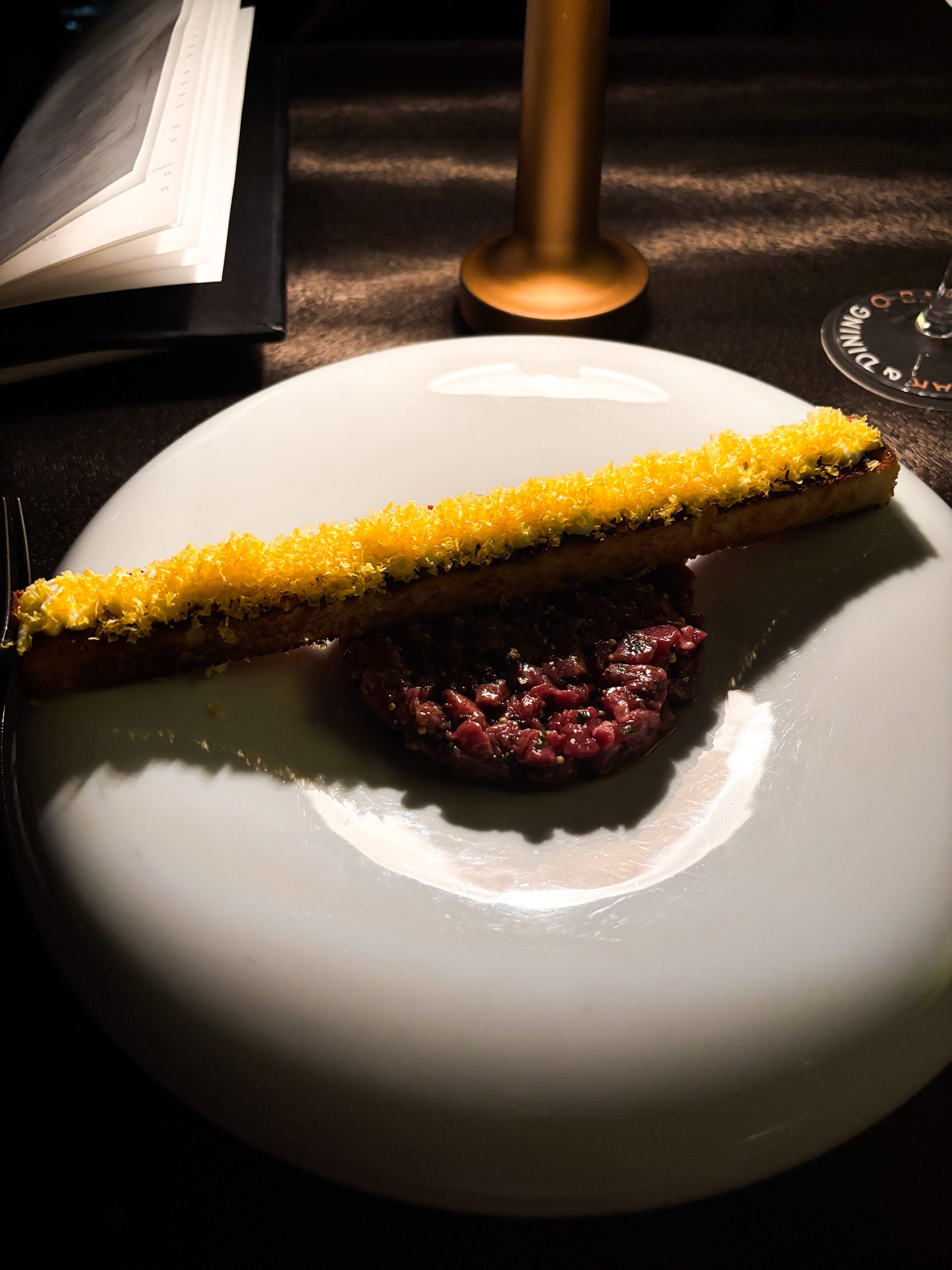
My relationship with food was complicated long before I ever set foot in O Bar & Dining. I didn’t realise it at the time, but a work Christmas party would end up changing the way I thought about food entirely.
As a child, I was an exceptionally picky eater. Convincing me to try something new was often a challenge, and for many years food felt more like a source of negotation than enjoyment. While my tastes eventually broadened, it wasn’t until I started my first job that my relationship with food began to change in a meaningful way.
There I was, 19 years old, bright eyed and juggling multiple things at once: learning how to be an employee (because I was never allowed to have a job while I was still in high school) and learning the tools of the trade that would go on to serve me well during my career in software development.
At that point in my life, I was still living at home, which meant that most of my meals were still determined by whatever was being cooked that night. The only form of “food freedom” that I had was that I could still choose what I ate at work. And boy, did I choose. The IT cadet that existed in those days pretty much went ham because that whiff of freedom was so intoxicating.
Then came my first office Christmas Party. It was held at O Bar and Dining. But at the time, it was called The Summit. I don’t recall much from that party, except that I didn’t realise that food could actually taste that good. It was less “food” and more “someone treats cooking with the care and attention that it deserves “.
At the time, the change didn’t feel that obvious. But I started looking forward to eating out more. A little pocket of the world that was all mine.
At first, I stuck to restaurants that were in the vincinity of the company office near the Town Hall area. They weren’t what I would now describe as fine dining, but I wouldn’t have considered them cheap eats either.
For 19 year old Anna, however, that distinction hardly mattered. What mattered was being able to choose what I wanted to eat. Just as importantly, the food felt as though it had been prepared by people who genuinely cared about what they were serving, rather than treating cooking as a chore to be comleted as quickly as possible.
For the first time, food wasn’t simply fuel or something that appeared on the dinner table. It was a choice. And choosing for myself turned out to be far more meaningful than I expected.
One slightly undesireable side effect of the unrestrained eating out that I did in my 20s was that my waistline and my cholesterol started to air their grievances. I did become overweight, necesitating the intervention of a personal trainer and dietician.
One of the things that I had made very clear in my earliest sessions with the dietician was that I was unwilling to fully give up fine dining because it was one of the few activities in my life at the time that felt like it truly belonged to me. Over years of sessions, I worked on steering my eating out meal choices towards healthier options. Having a side salad with a non-creamy dressing. Or simply watching my portion sizes. And limiting my alcohol intake.
What began as an act of independence eventually evolved into a form of self-care.
Looking back, that Christmas party at The Summit wasn’t memorable because of any particular dish. In truth, I can’t remember what I ate. What stayed with me was the realisation that food could be something worth paying attention to. Not just something to consume, but something to experience.
These days, I still enjoy fine dining, but it’s no longer about exercising freedom or proving a point. It’s about slowing down, appreciating craftsmanship, and giving myself permission to enjoy an experience for its own sake.
